


Have you noticed that while experiencing strong emotions and feeling overwhelmed, someone’s supportive presence can help to calm down? For example, a warm hug from someone you trust can ease anxiety. This is called co-regulation. In simple terms, co-regulation means that connection with a safe, calm and balanced person can help our own nervous system calm down and return to a more centered state.
How Our Nervous Systems Can Influence Each Other
Co-regulation can happen in moments when someone sits beside us during a difficult time, hugs us, or listens to our worries while staying calm and supportive. Another person’s caring presence, without judgement or criticism, can help us feel that we are not alone in our experience. Things may start to feel a little lighter, and a quiet sense of “I can get through this” may begin to grow.
During co-regulation, part of the communication also happens without words. Research has found that during communication, people’s nervous systems can influence each other. For example, breathing, heart rate or calming can, to some degree, synchronize with another person. This is also called physiological synchrony. For example, Richard V. Palumbo and several other researchers have written about this.

This way, a person who is in a calmer state can support another person’s calming too. Parents or people working with children have probably experienced this in their interactions with children. When we are able to stay calm ourselves, it is usually easier to support and soothe a child who is upset.
Why Co-Regulation Is Important
Research has shown that as children, we cannot yet regulate our nervous system independently. We need the help of a supportive adult. Our capacity for self-regulation develops gradually through repeated experiences where we are helped to be with our big feelings, calm ourselves and make sense of ourselves. In childhood, we also learn a lot by observing how the adults around us (parents, grandparents, teachers, coaches and others) relate to their own emotions.
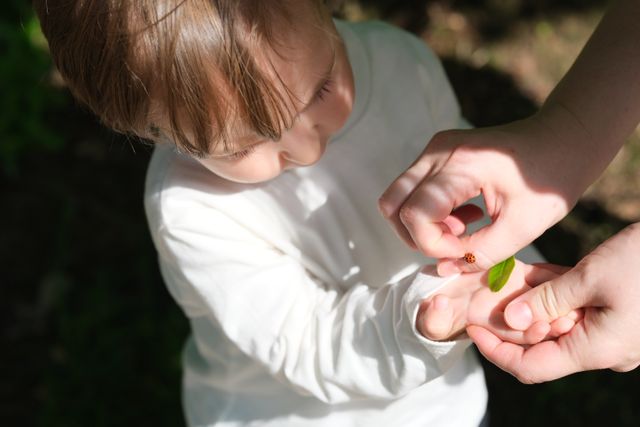
When we grow up in an environment where we are mostly supported during big feelings, we are more likely to develop an inner belief that feelings are tolerable, that they pass, and that we have control over ourselves. A sense of confidence is supported by safe connection, quality time and facing difficulties together.
When There Was Not Enough Co-Regulation
Without enough co-regulation experiences, it may be harder to tolerate and feel our feelings, even as adults. Growing up, we may have learned instead that when a strong feeling arises, we need to suppress it, protect ourselves, or quickly find something else to focus on.
And the goal here is not to look for someone to blame, but to notice cause and effect. Usually, it is not about bad intentions, but about patterns that have been repeated from one generation to the next. If someone did not receive enough co-regulation, it may also be harder for them to offer it to others.
Creating the Missing Experience
If we did not experience enough co-regulation while growing up, it is possible to consciously seek and create more of this experience in adulthood. Healthy co-regulation does not make us dependent or helpless. Quite the opposite. When we are able to experience enough support, presence and calming in connection with other people, this can gradually become an inner support that we can later rely on even when we are alone. Co-regulation often also encourages a person to support themselves in an age-appropriate way – so that alongside outer support, the capacity for inner support also grows. Our nervous system has the ability to change and adapt through experience.
From Co-Regulation to Self-Regulation
It makes sense that if we have not received enough support while experiencing strong emotions, it may initially be difficult to stay present with those feelings and understand and support ourselves at the same time. Calming ourselves only through the mind may not work if the body has not yet experienced enough that it is safe to feel emotions and that they can pass.
How can co-regulation help with this? In safe contact, we have the possibility to experience that someone can stay beside us without making our experience wrong or trying to push our feelings away. Another person can help us put words to what we are experiencing and understand it better. Through new experiences, our confidence can grow: we start to feel our feelings, can move through them, understand ourselves and return to a calmer state. Repeated supportive experiences can support nervous system plasticity and reduce automatic protective reactions.
In therapy sessions, I sometimes explain this through the example of training a muscle. When we first practise supporting ourselves, understanding ourselves and moving through emotions together with someone else, our so-called inner muscle begins to grow. Later, it can help us stay present with ourselves in difficult experiences and move through emotional waves more independently. In this way, we do not have to run away from our inner world, or cope in ways that would harm us long-term.
This is why co-regulation in safe relationships with loved ones and friends, in therapy, counselling or other supportive environments can be very important and healing.
We can start with small steps. For example, we can share a part of our experience or a feeling with a trusted person and ask them to listen without immediately offering solutions. Or we can let someone know that we would like supportive company, but do not yet want to talk more about our experience. At the same time, we can notice what is happening in our body. Even the experience that someone listens, or simply stays with us, can feel new and healing to the nervous system.

When we have received supportive co-regulation experiences, we can also use this experience as a resource for self-support. For example, we can remember the feeling of being able to support ourselves while being with another person, and then try to relate to ourselves in a similarly caring way.
I have also written more about how to validate your feelings.
Animals and Nature Can also Help
Co-regulation does not only happen between people. Animals can also help our nervous system calm down and return to the parasympathetic (“rest and digest”) state. For many people, being with a pet, stroking them, and sensing their calm breathing or presence is one way to experience more safety. Animals can also be a great resource when we do not feel so comfortable and safe around people yet.
Spending time in nature can support the nervous system in a similar way. Nature moves in its own calm rhythm. It does not ask us to explain ourselves or hurry us. For example, walking on a forest path, listening to birdsong or the sound of the sea – all of this can support self-regulation.
And I want to add one more thought. If safe connection and co-regulation are not available in the moment and we need support, it can also be calming for the nervous system to listen to a familiar safe voice, for example in a video or audio format, or to music or nature sounds that feel supportive to us.
When Co-Regulation Alone Is Not Enough
Experiencing co-regulation in adulthood can help us create some of the support we may not have received earlier in life. It can also be an important part of trauma-informed inner work. Still, it is good to keep in mind that even with the best intentions, co-regulation alone may not always work.
For example, if a strong trigger has brought up past trauma and a deep sense of unsafety, safe closeness and presence alone may not be enough to calm us down. In that case, support from someone who has experience with trauma work and knows how to guide us through the experience safely can be helpful. This can help us process what happened in the past, so it no longer affects us as strongly. Additional support can also be helpful when we experience anxiety, numbness, or other intense feelings most of the time, and our nervous system needs gradual support to come out of a constant state of alarm.
When offering co-regulation to someone, it is also important to sense our own boundaries and notice how much capacity we have to support someone else. It is wonderful how much safe connection and presence can often support another person, but we do not always have the inner resources for it. And that is okay too.
Conclusion
If it is difficult for us to stay present with big emotions and support ourselves, one reason may be that we have not have experienced enough co-regulation. If no one supported us when things felt difficult inside, it makes sense that learning to support ourselves has been harder too.
The good news is that these experiences can also be created later in adulthood – in safe relationships, in therapy, in connection with animals and in other supportive environments. Co-regulation can also help us learn self-regulation: the ability to stay more present with our feelings and experiences, support ourselves and return to a calmer state once the danger has passed.

And even when we have become quite good at supporting ourselves, it is completely natural to still value the support and presence of other people. I want to point this out because the idea of moving from co-regulation to self-regulation is not that we become disconnected from others. Rather, it is that we can support ourselves when we need to, and that our wellbeing does not depend only on other people. That our inner capacity can grow, while we can also remain in compatible relationships. 💛